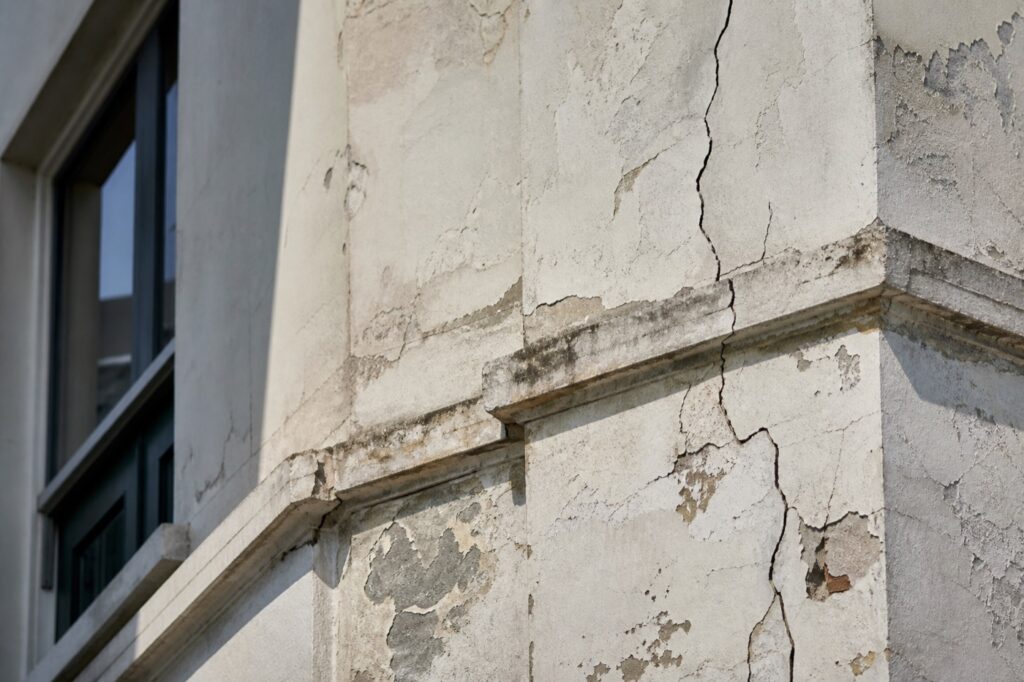
A crack in concrete is more than a cosmetic flaw — it’s a pathway for water, and in Ontario’s freeze-thaw climate, water is what turns a small crack into a structural problem. Concrete crack injection stops that cycle, often for a fraction of the cost of replacement.
Why cracks matter
When water enters a crack and freezes, it expands by roughly nine percent, wedging the crack wider each cycle. In parking structures and foundations, that same water reaches the reinforcing steel, which corrodes and expands, spalling the concrete from the inside out.
Two proven injection methods
Epoxy injection — for structural repair
Low-viscosity epoxy is injected under pressure to penetrate the full depth of the crack. Once cured, it structurally welds the concrete back together — the repaired section is often stronger than the surrounding material. Ideal for cracks that carry load.
Polyurethane injection — for active leaks
Polyurethane resin reacts with moisture and expands to fill and seal the crack, chasing water even in wet conditions. It stays flexible, accommodating minor movement. Ideal for stopping active water infiltration in foundations and below-grade walls.
What the process looks like
- The crack is cleaned and injection ports are installed along its length.
- The surface is sealed so the resin stays in the crack under pressure.
- Resin is injected port to port until the full crack is filled.
- Ports are removed and the surface is finished clean.
Most cracks are sealed in a single visit, with no excavation and minimal disruption.
Stop the leak before it becomes a rebuild
The earlier a crack is injected, the less damage the water can do. If you’re seeing leaks, damp patches or cracks in a foundation or parking structure, an inspection now can save a major repair later.